Choosing a countertop can be overwhelming when renovating a kitchen. To help simplify the decision, our team of designers have prepared a guide on the countertop materials that are most commonly used in our projects.
Laminate
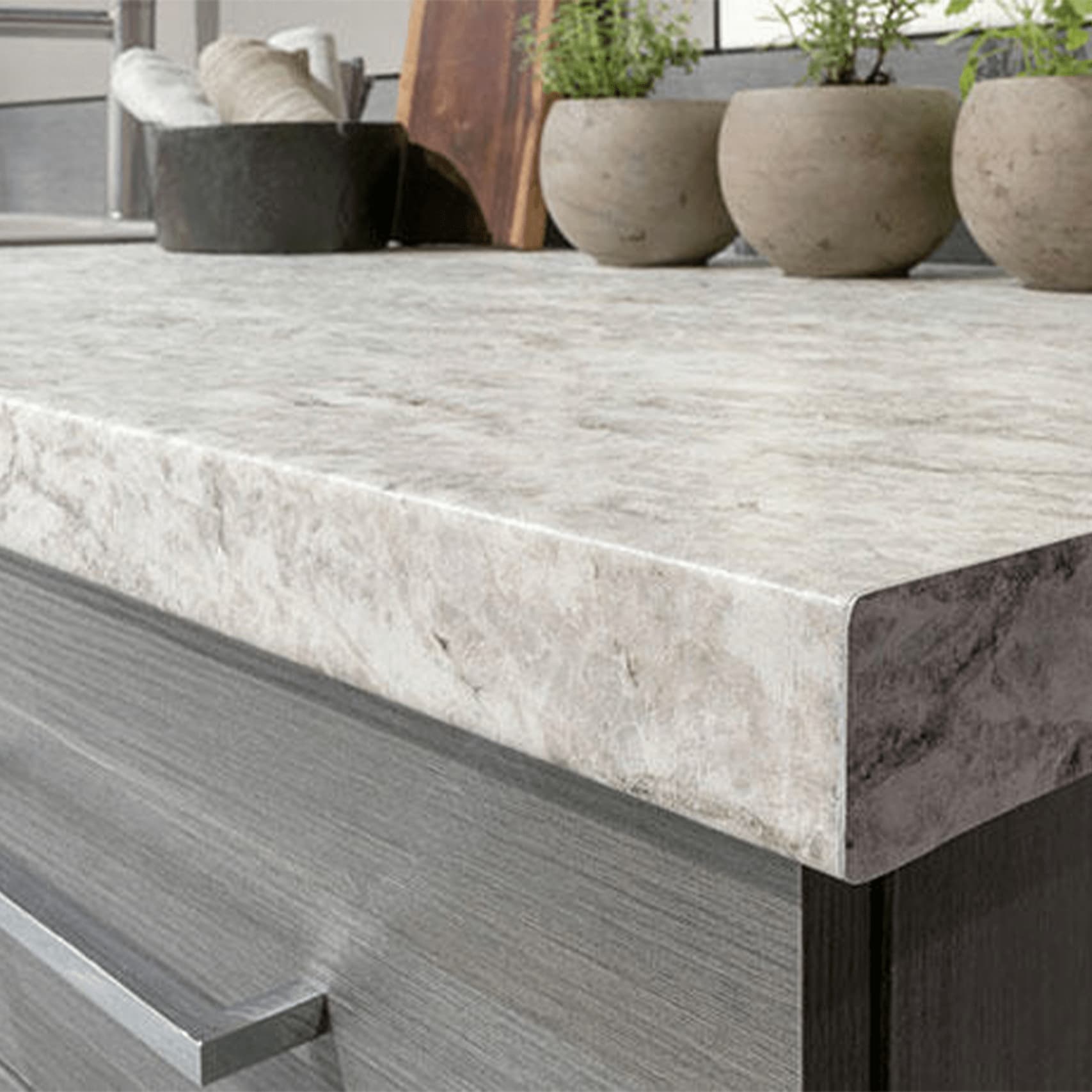
Laminate is a popular choice for budget-conscious kitchen renovations. Available in a wide variety of colors and finishes, it can replicate the look of more expensive materials while remaining easy to clean and maintain. Its greatest advantage is its affordability and excellent value. However, laminate is more susceptible to damage from direct heat and prolonged exposure to moisture than other countertop materials.
Solid Wood
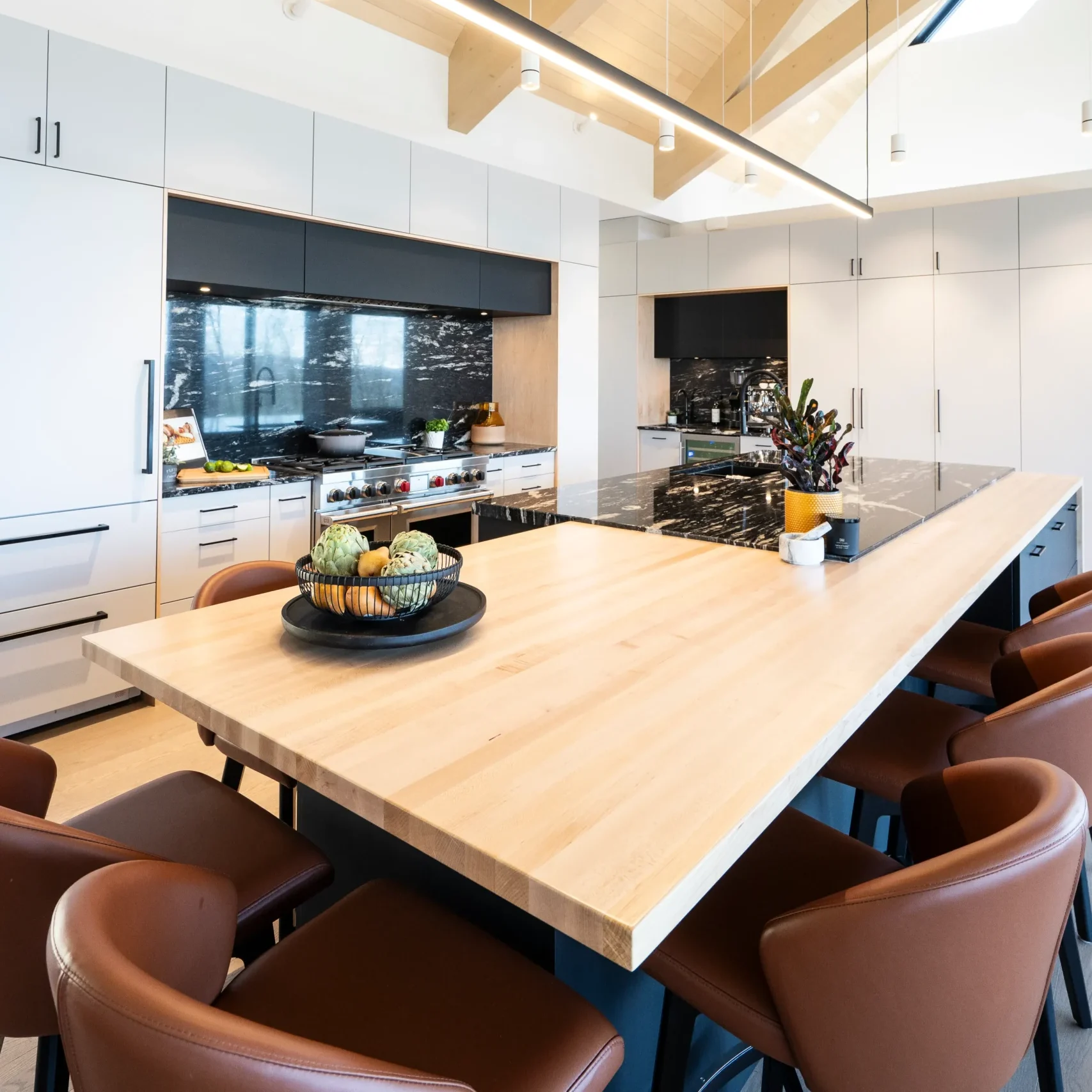
Solid wood brings warmth, character, and a natural feel to any kitchen. It can be refinished over time, which helps extend its lifespan. However, it requires more maintenance than other materials and remains susceptible to moisture, scratches, and stains. Its appeal lies primarily in its timeless beauty and natural charm.
Quartz
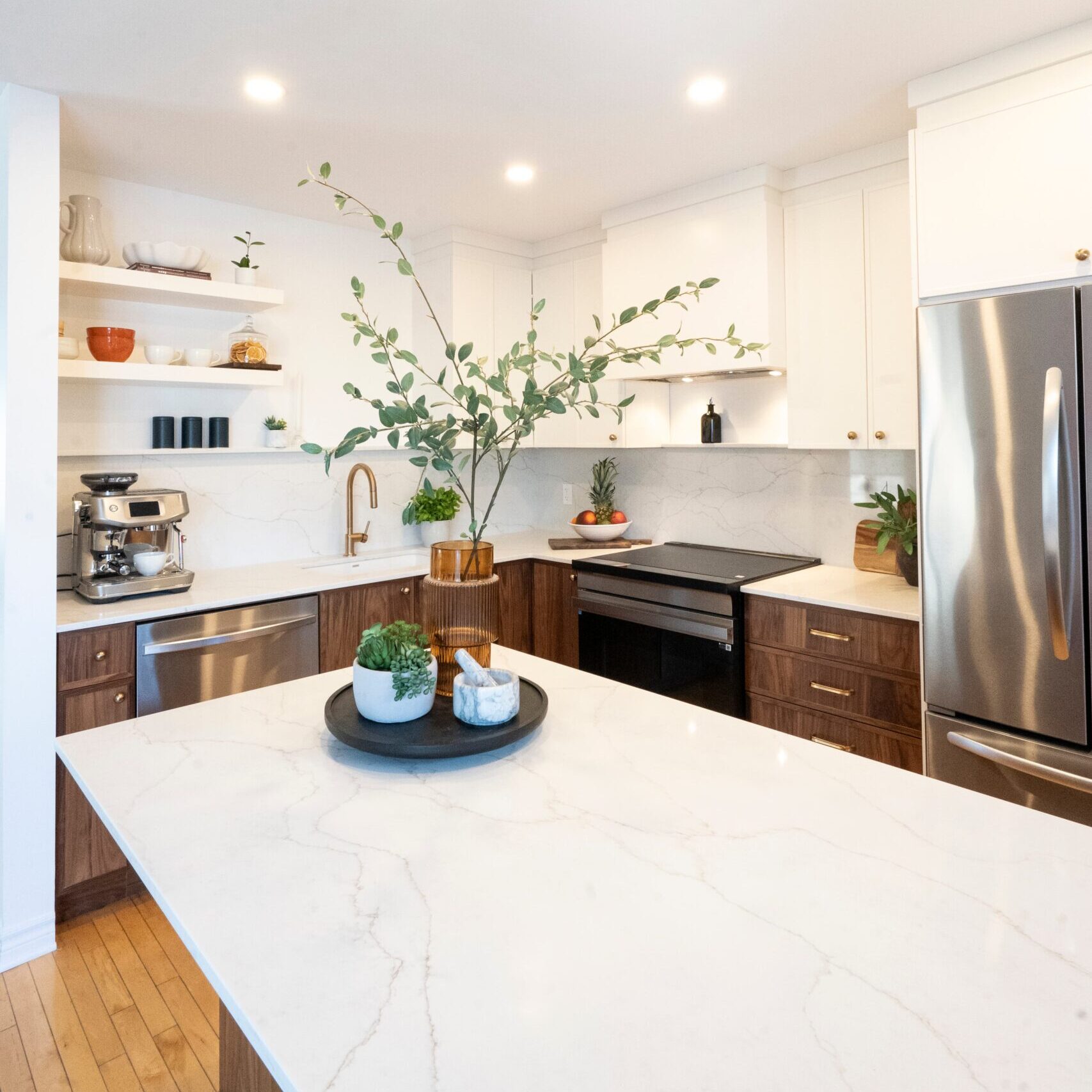
Quartz is an engineered surface made from natural quartz crystals, resins, and pigments. It is highly valued for its durability, low maintenance, and consistent appearance. Its non-porous surface resists stains and is easy to clean, making it a practical choice for busy kitchens. Quartz is available in an extensive range of colors, patterns, and textures, offering virtually endless design possibilities. However, it is less resistant to high heat than some natural stone surfaces.
Granite
Granite is a natural stone known for its durability and resistance to heat and wear. It offers exceptional longevity and a luxurious appearance. Because it is a natural material, sealing is recommended to help prevent staining. Granite countertops are most commonly available in 2 cm and 3 cm thicknesses. Every slab is unique, featuring its own distinctive colors and patterns.
Porcelain, Ultra-Compact Surfaces, and Sintered Stone
These high-end surfaces are thin, dense, and highly durable. Their outstanding resistance to heat, scratches, and stains makes them among the most durable countertop options available. Since the patterns are typically applied only to the surface, the countertop edges are usually finished in a solid color. Because porcelain is thinner than most other countertop materials, it creates a lighter, more contemporary look that can instantly modernize a space.
Quartzite
Quartzite is a natural stone known for its exceptional durability, comparable to granite, and its striking veining patterns. Its unique beauty and natural depth create a luxurious look that is difficult to replicate with other materials. While a polished finish remains the most popular option, a matte finish can offer an equally sophisticated appearance. Quartzite is typically more expensive than granite or quartz, making it a premium choice for high-end kitchens.
Laminate
Laminate is a popular choice for budget-conscious kitchen renovations. Available in a wide variety of colors and finishes, it can replicate the look of more expensive materials while remaining easy to clean and maintain. Its greatest advantage is its affordability and excellent value. However, laminate is more susceptible to damage from direct heat and prolonged exposure to moisture than other countertop materials.
Solid Wood
Solid wood brings warmth, character, and a natural feel to any kitchen. It can be refinished over time, which helps extend its lifespan. However, it requires more maintenance than other materials and remains susceptible to moisture, scratches, and stains. Its appeal lies primarily in its timeless beauty and natural charm.
Quartz
Quartz is an engineered surface made from natural quartz crystals, resins, and pigments. It is highly valued for its durability, low maintenance, and consistent appearance. Its non-porous surface resists stains and is easy to clean, making it a practical choice for busy kitchens. Quartz is available in an extensive range of colors, patterns, and textures, offering virtually endless design possibilities. However, it is less resistant to high heat than some natural stone surfaces.
Granite
Granite is a natural stone known for its durability and resistance to heat and wear. It offers exceptional longevity and a luxurious appearance. Because it is a natural material, sealing is recommended to help prevent staining. Granite countertops are most commonly available in 2 cm and 3 cm thicknesses. Every slab is unique, featuring its own distinctive colors and patterns.
Porcelain, Ultra-Compact Surfaces, and Sintered Stone
These high-end surfaces are thin, dense, and highly durable. Their outstanding resistance to heat, scratches, and stains makes them among the most durable countertop options available. Since the patterns are typically applied only to the surface, the countertop edges are usually finished in a solid color. Because porcelain is thinner than most other countertop materials, it creates a lighter, more contemporary look that can instantly modernize a space.
Quartzite
Quartzite is a natural stone known for its exceptional durability, comparable to granite, and its striking veining patterns. Its unique beauty and natural depth create a luxurious look that is difficult to replicate with other materials. While a polished finish remains the most popular option, a matte finish can offer an equally sophisticated appearance. Quartzite is typically more expensive than granite or quartz, making it a premium choice for high-end kitchens.
In conclusion, when selecting a countertop, every material offers its own unique advantages in terms of appearance, durability, maintenance, and budget. If you're planning a kitchen renovation, our experienced kitchen designers would be happy to guide you through the selection process and help you find the perfect fit for your space.